

BUILDINGS INSURANCE
Protect the home you’ve
worked hard for.
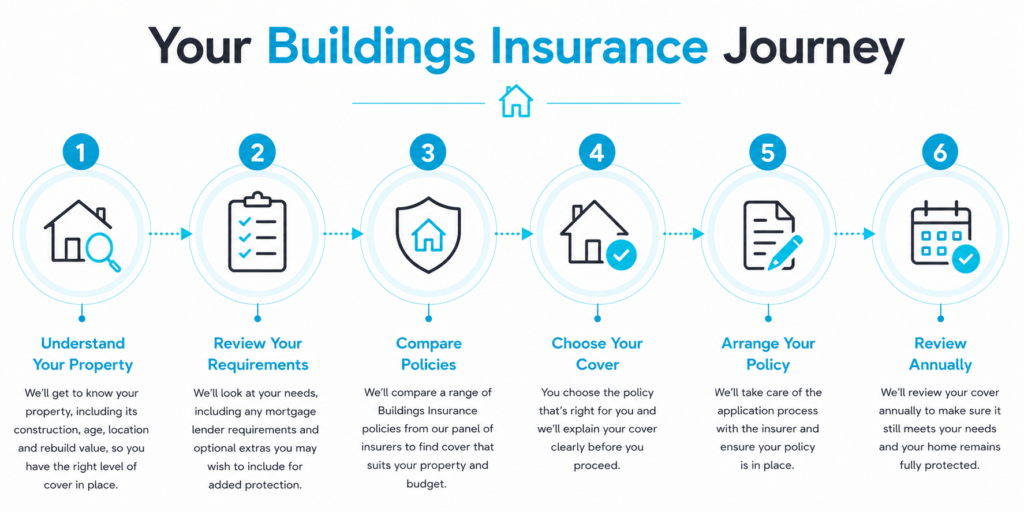
Buildings insurance can help protect the structure of your home
against unexpected events such as fire, flooding, storms and subsidence.
Whether you’re buying a new home or reviewing your existing cover,
we’ll help you compare the available options.
✔ Protect the structure of your home
✔ Required by most mortgage lenders
✔ Flexible cover options
Buildings Insurance Essentials
🏠 Protecting Your Home
Buildings Insurance is designed to cover the structure of your property, including permanent fixtures and fittings, if they’re damaged by an insured event.
🌧️ What’s Typically Covered?
Most Buildings Insurance policies provide cover for events such as fire, storms, flooding, escape of water, subsidence (subject to policy terms) and other insured risks.
🛠️ Optional Extras
Many insurers offer optional extras such as accidental damage, legal expenses, home emergency assistance and personal possessions cover.
📄 Making a Claim
If you need to make a claim, your insurer will explain the process and assess the damage in accordance with your policy terms and conditions.
Why Consider Protection?
For most homeowners, their property is their biggest financial investment.
Buildings Insurance is designed to help cover the cost of repairing or rebuilding your home if it’s damaged by an insured event, subject to the policy terms and conditions.
If you have a mortgage, your lender will usually require Buildings Insurance to be in place from exchange of contracts, as this is when you become legally responsible for the property.
Even if you own your home outright, Buildings Insurance can provide valuable financial protection against unexpected damage.
What’s Typically Covered?
Every insurer is different, but Buildings Insurance commonly provides cover for:
🔥 Fire
Damage caused by fire, smoke and explosion.
🌪️ Storm Damage
Damage caused by storms, strong winds and certain weather events.
💧 Escape of Water
Damage caused by leaking pipes, tanks or heating systems.
🌊 Flooding
Cover for flood damage where included under the policy terms.
🧱 Subsidence
Many policies provide cover for subsidence, heave and landslip, subject to policy terms, excesses and underwriting criteria.
🚪 Permanent Fixtures
Typically includes kitchens, bathrooms, fitted wardrobes, garages, walls, fences and outbuildings, depending on the policy.
Optional Extras
Depending on the insurer, you may wish to consider:
🛠️ Accidental Damage
Provides additional protection against accidental damage to your home.
🚰 Home Emergency
May help with emergency call-outs for issues such as plumbing, heating or electrical failures, depending on the policy.
⚖️ Legal Expenses
Can provide cover towards certain legal costs in specified situations.
🏡 Alternative Accommodation
Many policies include cover for temporary accommodation if your home becomes uninhabitable following an insured event.
Important Information
We do not provide regulated insurance advice.
We’ll explain the options available, provide clear information about the different types of Buildings Insurance and help arrange cover if you decide it’s right for you, allowing you to make an informed decision based on your own circumstances.
What Can Affect the Cost?
The cost of Buildings Insurance depends on a number of factors.
Factors that may affect the cost include:
Property Location
Where your property is located may affect the premium.
Property Type
The age, construction and rebuild cost of your property all play a part.
Rebuild Cost
Buildings Insurance is usually based on the cost of rebuilding your property, rather than its market value.
Claims History
Previous insurance claims may influence the premium.
Level of Cover
Optional extras and the level of cover selected will affect the overall cost.
Frequently Asked Questions
Looking to Arrange Buildings Insurance?
Whether you’re buying your first home, moving house, remortgaging or reviewing your existing insurance, we’ll help you understand the options available and arrange cover if you decide it’s right for you.
Explore Related Mortgage Guides
Many of our clients explore more than one mortgage option before deciding what’s right for them. Here are some related guides that may also be useful.