

FIRST-TIME BUYERS
Buying your first home
doesn’t have to feel
overwhelming.
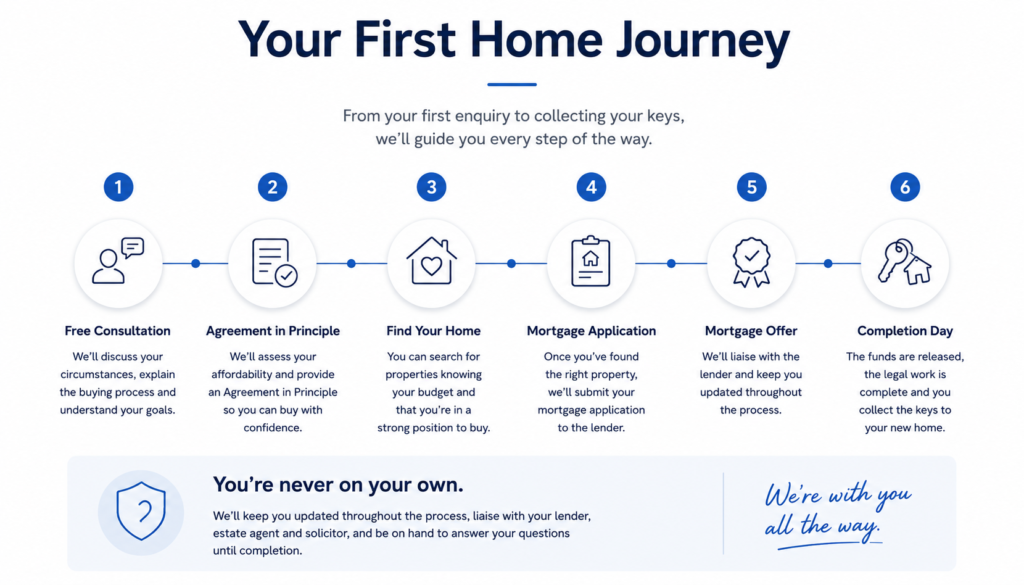
From understanding deposits and affordability to securing your mortgage
offer and collecting the keys, we’ll guide you through every stage of
your first home journey with clear, straightforward advice.
✔ Whole of Market Mortgage Advice
✔ Free Consultation
✔ Support from enquiry to completion
First-Time Buyer Mortgage Essentials
First-time buyer mortgages can sometimes feel complicated, but they don’t have to be. From understanding deposits and affordability to securing your mortgage offer and collecting the keys, we’ll guide you through every stage of your first home journey with clear, straightforward advice.
🏡 How much deposit do I need?
Most first-time buyers will need a deposit of at least 5% of the property purchase price, although the amount required will depend on the lender, the property and your individual circumstances. A larger deposit can sometimes give you access to a wider choice of mortgage products and potentially better rates.
💷 How much can I borrow?
This varies from lender to lender. Your income is important, but lenders will also consider your regular commitments, credit history, deposit and other household expenditure. We can assess your circumstances and compare how different lenders are likely to calculate your affordability. The amount available on first-time buyer mortgages can therefore differ significantly between lenders.
📋 What documents will I need?
Typically, you’ll need to provide proof of identity and address, evidence of your income and bank statements. If you’re self-employed, lenders may require additional information such as tax calculations, tax year overviews or company accounts. We’ll let you know exactly what’s needed for the lender we recommend.
🔑 What costs should I budget for?
Your deposit is only one of the costs to consider. Depending on your purchase, you may also need to budget for solicitor or conveyancing fees, a survey, mortgage or valuation fees, moving costs and any applicable Stamp Duty Land Tax. We’ll explain the mortgage-related costs before you proceed so you know what to expect.
First-time buyer mortgages can vary considerably between lenders, so understanding your options early can help you plan your purchase with confidence.
Why Choose Liberty Money for Your Remortgage?
Independent mortgage advice
Clear comparison of your options
Support from review to completion
Advice tailored to your plans
Budgeting for Your First Home
Buying your first home involves more than just saving a deposit. From legal fees to surveys and Stamp Duty (where applicable), we’ll help you understand every cost involved so you can budget with confidence.
Deposit
Your deposit is usually the largest upfront cost. We’ll explain how much you’ll need and which lenders are available based on your deposit size.
Survey & Valuation
A lender may require a valuation, and you may also choose a HomeBuyer or Building Survey for additional peace of mind.
Solicitor Fees
Your solicitor or conveyancer will handle the legal work involved in buying your home. We’ll explain the typical costs before you proceed.
Mortgage Product Fees
Some mortgage products include arrangement fees, while others don’t. We’ll compare the overall cost—not just the interest rate—to find the right option.
Adviser Fees
We’ll explain any adviser fees before you proceed, so you’ll always know exactly what to expect.
Stamp Duty
Many first-time buyers pay reduced or no Stamp Duty, depending on the purchase price and current government rules. We’ll explain whether it applies to your purchase and include it when helping you budget.
Frequently Asked Questions
Ready to Buy Your First Home?
Let’s find out whether your current deal is still the right one for you.
Buying your first home doesn’t have to be complicated. Whether you’re just starting to save, ready to make an offer or simply have questions about the process, we’re here to help you take the first step with confidence.
Explore Related Mortgage Guides
Many of our clients explore more than one mortgage option before deciding what’s right for them. Here are some related guides that may also be useful.