
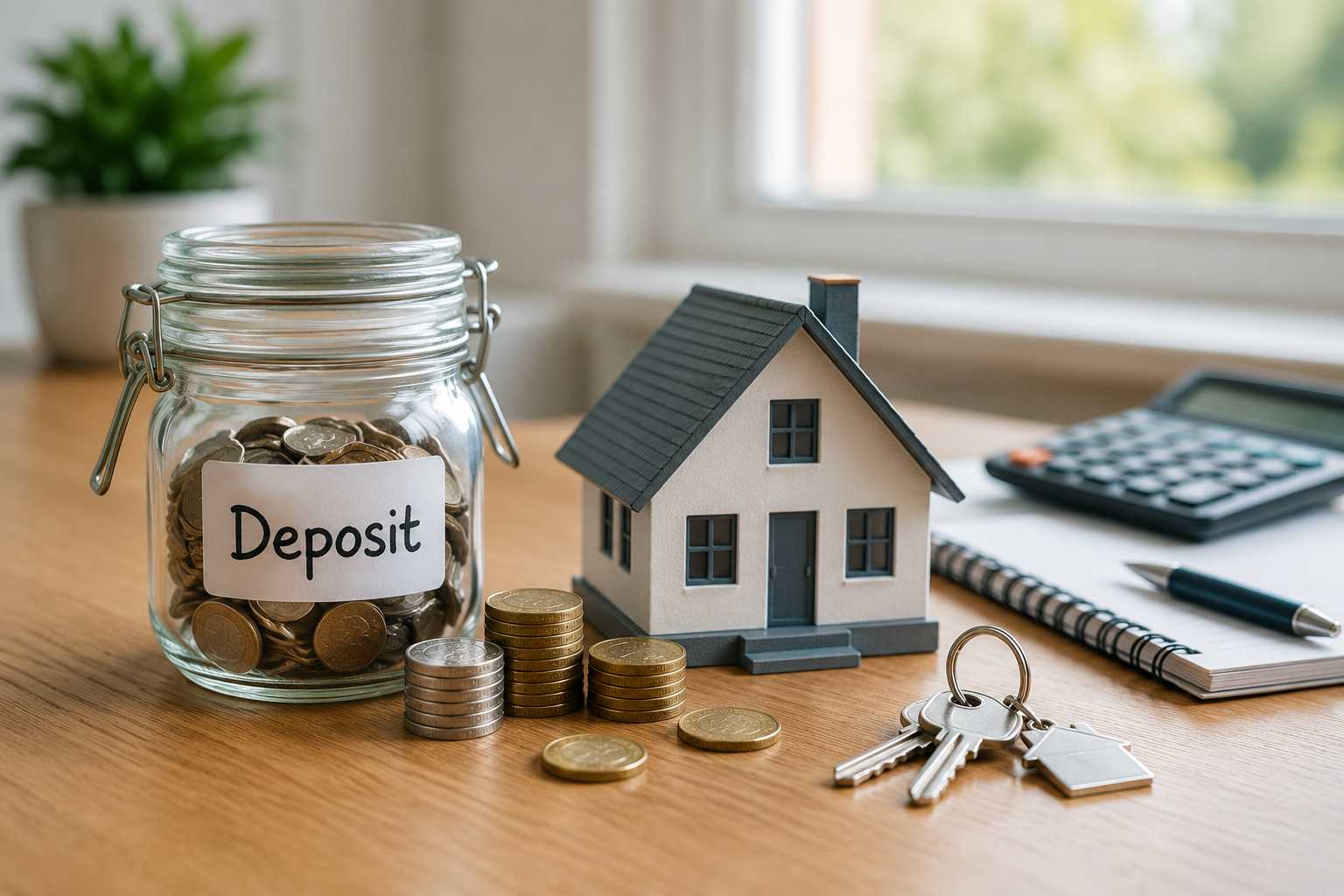
How Much Deposit Do I Need to Buy a House?
By Liberty Money · 11 August 2026 · 5 min read
One of the first questions many buyers ask is: how much deposit do I actually need to buy a house?
There’s no single answer that applies to everyone. The amount you’ll need can depend on the property you’re buying, your circumstances and the mortgage products available to you.
The good news is that you may not need as large a deposit as you think.
What is a mortgage deposit?
Your deposit is the amount of the purchase price that you provide yourself, with the mortgage normally covering the remainder.
For example, if you were buying a property for £250,000 with a £25,000 deposit, you would need a £225,000 mortgage.
That means you would be borrowing 90% of the property’s value — commonly referred to as a 90% loan-to-value (LTV) mortgage.
The calculation would be:
£225,000 mortgage ÷ £250,000 property value = 90% LTV
Generally, the larger your deposit, the lower your loan-to-value.
What is the minimum deposit for a mortgage?
Some mortgages are available with a 5% deposit, meaning you could potentially borrow up to 95% of the property’s value.
Using a £250,000 property as an example:
5% deposit = £12,500
Mortgage required = £237,500
However, being able to provide a 5% deposit doesn’t automatically mean you’ll qualify for a 95% mortgage.
The lender will still assess things such as your income, affordability, credit history and the property you’re purchasing.
Lender criteria can also vary considerably.
Can I get a mortgage with no deposit?
In certain circumstances, 100% mortgages are available, allowing eligible borrowers to purchase without providing a traditional cash deposit.
These aren’t suitable or available for everyone and usually have specific eligibility requirements.
Some products may take account of circumstances such as your rental payment history or support from family members.
If you don’t currently have a deposit, it can therefore still be worth exploring your first-time buyer mortgage options rather than assuming home ownership isn’t possible.
Is a 10% deposit better than 5%?
Potentially.
If you can increase your deposit from 5% to 10%, your mortgage would move from approximately 95% LTV to 90% LTV.
That can potentially give you access to a wider range of mortgage products and different interest rates.
But that doesn’t necessarily mean you should delay buying simply to reach a particular deposit percentage.
For example, you may need to weigh up the potential benefit of a larger deposit against factors such as property prices, your current housing costs and how long it would take you to save the additional amount.
The right balance will depend on your individual circumstances.
What happens if I can put down a larger deposit?
Mortgage products are commonly arranged into different loan-to-value bands, such as:
95% LTV – approximately 5% deposit
90% LTV – approximately 10% deposit
85% LTV – approximately 15% deposit
80% LTV – approximately 20% deposit
75% LTV – approximately 25% deposit
These aren’t guarantees of particular rates or products, but they help explain why the size of your deposit can affect the mortgages available.
As your LTV reduces, you may find that more mortgage options become available.
However, there’s no point putting every penny you have into the deposit if it leaves you without money for the other costs of buying and moving.
Don’t forget the other costs of buying a home
Your deposit isn’t the only money you’ll need.
Depending on your purchase and circumstances, you may also need to budget for:
- Solicitor or conveyancing fees
- Surveys and valuations
- Mortgage fees
- Moving costs
- Buildings insurance
- Stamp Duty Land Tax, where applicable
- Furniture, decorating or immediate repairs
Keeping some money aside for these costs can be sensible rather than using all of your available savings for the deposit.
Can my family help with my deposit?
Yes. Many lenders accept a gifted deposit, often from parents or other close family members.
The lender and solicitor will normally want confirmation that the money is genuinely a gift rather than a loan that needs to be repaid.
They may also need evidence showing where the funds have come from.
If somebody is helping with your deposit, tell your mortgage adviser and solicitor early in the process so the requirements can be checked.
What if my deposit is coming from somewhere else?
Deposits don’t always come entirely from savings.
Depending on the lender and circumstances, funds might come from sources such as:
- Existing savings
- A Lifetime ISA
- A gifted deposit
- Equity from another property
- Inheritance
- Gifts
Different lenders can have different rules about acceptable sources of deposit, so it’s important to establish this before making a mortgage application.
How much deposit should I aim for?
Rather than focusing only on achieving a particular percentage, it can be more useful to look at the bigger picture.
You need to consider:
How much could you realistically borrow?
What monthly payment would be comfortable?
How much do you need to keep aside for fees and emergencies?
Would increasing your deposit materially improve the mortgage options available to you?
Sometimes adding a relatively small amount to a deposit can move a mortgage into a different LTV band. In other situations, keeping that money in savings may be more important.
This is one of the areas where comparing the actual options available can be more useful than simply aiming for the biggest deposit possible.
Buying your first home?
If you’re saving for your first property, our First-Time Buyer Mortgages page explains more about how we can help you through the buying process.
We can look at your income, existing deposit and circumstances and help you understand how much you may be able to borrow and the mortgage options that could be available.
Important information
Your home may be repossessed if you do not keep up repayments on your mortgage.